The Border Gets Loud Again
Once again, the Thai-Cambodian border is not acting like a border. It is acting like a megaphone.
Artillery thumps. Rockets crack. Air strikes roar. And a long, thin corridor of villages has to empty out, again, like someone pulled a fire alarm that never gets fixed. Families sit on mats in temples, schools, and public halls. Pets sit with them. No one looks relaxed. Everyone tries to look prepared.
This is the part that feels cruelest. It is not only the danger. It is the repeat of it.
After more than one ceasefire, people still pack the same bags. They still fold the same blankets. They still make the same choice between staying with the house or saving the family. The math is simple. The heart part is not Moral Revolutions.
How a Ceasefire Becomes a Pause Button
A ceasefire sounds like a stop. In real life, it can be a pause.
In July, after five days of hard fighting, Thailand and Cambodia agreed to an “immediate and unconditional” ceasefire in talks hosted in Malaysia, with strong pressure from the United States. Later, an expanded deal was signed in October. It was meant to reduce risk on the ground and keep the temperature down. It did some of that, for a while.
But a ceasefire is not a border treaty. It does not redraw maps. It does not remove old grudges from new soldiers. It does not stop politics from turning fear into fuel.
So the ceasefire held like a thin umbrella. The UK’s “Stealth Tax” It helped in light rain. It did not help in a storm.
By November, Thailand said it would halt parts of the October de-escalation plan after a Thai soldier was hurt by a landmine that Bangkok said was newly laid. Cambodia denied the claim. Each side heard the other side’s denial as proof of bad faith. Trust, already fragile, got thinner.
When trust is thin, small events become big. And borders are full of small events.
The Spark That Lit This Week
The latest flare-up was set off by something that, on paper, sounds minor.
Thai soldiers were guarding an engineering unit working on a road improvement project in a disputed border area. Thailand says the team was operating inside Thai sovereign territory. Then shots were fired. Two Thai soldiers were injured. Thailand’s military framed it as a deliberate attempt to harm Thai personnel. Chasing the Sun Cambodia and Thailand each blamed the other for starting it.
That is the pattern. One incident. Two stories. Zero trust.
After that first exchange, accusations did not stay on paper. They turned into movement. Units repositioned. Heavier weapons appeared. Drones were alleged. Rocket systems were named out loud. Then the “minor” incident became a multi-day cycle of hits and replies.
This is how borders “randomly” explode. The randomness is mostly a story we tell ourselves so we can sleep.
Why It Came Back So Soon
The fast return to violence looks shocking only if we pretend the underlying problem was solved in July.
It was not.
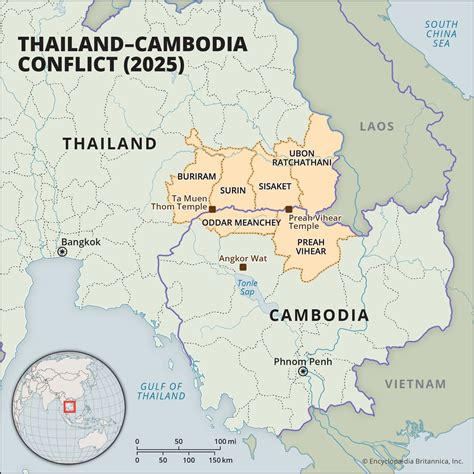
Thailand and Cambodia have contested parts of their 817-kilometre land border for more than a century. Some points are undemarcated. Some claims are tied to old maps and old empires. Temples sit near the line like priceless matchsticks in dry grass. National pride lives there, too.
When two countries disagree about where the line is, every bulldozer, patrol, and fence post becomes political.
Road work can be read as “normal upkeep.” It can also be read as “quiet annexation.” Soldiers do not need to be villains for that kind of misread. They only need to be tense, tired, and sure they are defending home.
So the fighting came back “soon” because the border never really cooled. It only went quiet enough for leaders to say it was calm.
The Landmine Problem That Poisoned the Air
Landmines are not just weapons. They are a message that lasts after the messenger leaves.
After July, Thai soldiers were wounded in multiple mine incidents, and Thai officials argued that at least some mines looked newly laid. Cambodia denied planting them. The facts mattered, of course. But the feeling mattered more.
Mines make every patrol feel like a trap. They create Floating Fortress suspicion without firing a shot. They turn a ceasefire into a guessing game where the prize is survival.
By November, Thailand was openly demanding an apology over a mine incident and suspended parts of the enhanced ceasefire plan. Cambodia urged Thailand to stick to the deal. Then there was more firing near disputed villages. One person was killed in Cambodia, and others were injured, as each side accused the other of starting it.
This is how a ceasefire erodes. Not with one dramatic betrayal. With a slow drip of events that each side treats as proof that the other side cannot be trusted.
Escalation Is Easier Than De-Escalation
Once the first shots are fired, the next steps are sadly predictable.
Thailand launched airstrikes, saying it was targeting military assets and trying to weaken Cambodia’s military capability. Cambodia accused Thailand of aggression and said it had not retaliated in kind. Rockets and artillery fire were reported along multiple areas. A Thai soldier and Cambodian civilians were reported killed early in the renewed clashes, and evacuations spread across border provinces.
This week’s fighting has been described as among the most intense since July, with at least 20 deaths and more than 260 wounded reported across both countries’ tallies.
That number is not just a number. It is families.
And as always, the civilians move first. Thailand evacuated hundreds of thousands from border provinces, and Cambodian authorities also moved large numbers to safety. Reports from the ground describe packed shelters, traffic jams, Chernobyl’s Damaged Radiation Shield and people waiting out the noise in places that were never designed to be home.
War plans may be complex. The human result is simple. People run.
The Politics Layer Nobody Likes to Admit
We often talk about border clashes like they are purely “military.” That is neat. It is also incomplete.
Leaders react to public anger. Armies react to leaders. And both react to the fear of looking weak.
In Thailand, the prime minister dissolved parliament and elections are ahead. In a tense moment, a hard line can look like strength. A compromise can be sold as surrender, even when it is the safer path.
In Cambodia, leaders face their own pressures and narratives. Each side has internal audiences. Each side has old wounds that can be reopened with one bad photo and one hot headline.
So when diplomats say “exercise restraint,” they are asking leaders to do something that feels risky at home. It can be done. It just costs political capital. And political capital is a currency most leaders spend slowly.
The Trump Factor, With Less Magic Than Advertised
The July ceasefire was pushed hard by President Donald Trump, with Malaysia’s Prime Minister Anwar Ibrahim playing a key role. Trump has portrayed himself as the person who can stop the shooting, again.
There is a blunt truth here.
Outside pressure can force a pause. It cannot force trust.
This week, Trump spoke with Thailand’s prime minister, who said there was still no ceasefire and framed Thailand as not being the aggressor. Trump said he wanted a return to the original ceasefire first agreed in July. U.S. administration publish a National Security Strategy.
At the same time, AP reported Trump saying both leaders agreed to cease shooting and return to the earlier accord, after his calls with both sides.
So we have diplomacy happening in real time, in public, through statements that do not always match.
That is not unusual. It is modern crisis management. It is also confusing for civilians who just want one thing. Quiet.
And on the ground, in the shelters, people are not convinced that any outside figure can fix what the border keeps breaking. Some evacuees have voiced deep doubt that the fighting will end soon, because they have seen “ending” before. It did not last.
The Border Itself Is the Main Character
It is tempting to look for a single villain.
Sometimes there is one. Often there is not.
Here, the border is the main character. The disputed patches, the temples, the old maps, the pride, the troops that stare at each other day after day. It is a slow story that occasionally becomes a loud one.
And because it is slow, it is easy for the rest of us to ignore until the rockets fly.
The hard part is that solutions must also be slow. They must be boring Grand Central Holiday Fair. They must be technical. They must feel like paperwork, not victory.
That means clear demarcation where possible. It means joint mechanisms for incidents, so a gunshot does not become a headline war. It means agreed rules for construction projects and patrol routes. It means mine clearance that is transparent and verified, so “new mine” is not just an accusation but a checkable fact.
These are not glamorous steps. That is why they are often skipped.
Instead, we get the glamorous part. The jets. The speeches. The flags. The dramatic words about sovereignty.
The border does not care about dramatic words. It cares about who stands where, with what weapon, and what they do when they get scared.
What We Can Say Without Pretending
From where we sit, far from the bunkers and shelters, it is easy to ask for neat endings.
But most of all, neat endings are rare in disputes like this. They are earned. They take time. They take humility. They take leaders who can sell “calm” as a form of strength.
In the meantime, the people near the border live inside a loop.
Evacuate. Wait. Return. Repair. Hope. Hear the boom. Evacuate again.
If that sounds bleak, good. It should. It is bleak.
The irony is that both countries have so much to gain from calm. Trade. Tourism. Stable growth. A region that feels safe instead of jittery. But when mistrust runs high Broadway, calm starts to look like something the other side will exploit.
That is the trap. And traps do not spring once. They spring again and again, until someone changes the mechanism.
A Quiet Hope, With Earplugs
We can hold two thoughts at once.
We can respect national borders and also admit that borders can be messy in real life. We can believe leaders want peace and also see how quickly pride turns peace into a performance. We can praise ceasefires and still say, politely, that a ceasefire is not a cure.
The people on those mats already understand this. They do not need lectures. They need days without noise.
So we root for the unglamorous work. The kind that does not fit on a slogan. The kind that keeps a road crew from becoming a trigger.
And yes, we root for silence. Real silence. The kind that lets families go home and stay there.