María Corina Machado walked into Oslo and said the quiet part out loud.
Nicolás Maduro will leave power, she said, “whether negotiated or not.” She also said she is focused on a peaceful transition.
Those two lines sit together like mismatched shoes. One sounds like force. The other sounds like calm. But most of all, that is the exact tension Venezuela has lived with for years: the desire for a clean handover, and the reality of a system that rarely hands anything over.
Machado’s appearance in Norway was not just a speech stop. It was a signal flare. She arrived after more than a year in hiding and in defiance of a travel ban that has shadowed her for about a decade. It was meant to show she is still moving, still organizing, still betting that the end of the story is closer than it looks.
In other words, she came to the world’s most polite UK’s Reeves stage to deliver a message that is not polite at all.
A Nobel Prize in the Middle of a Standoff
Machado is not only an opposition leader. She is also the 2025 Nobel Peace Prize laureate, honored for pushing democratic rights and a peaceful transition in Venezuela.
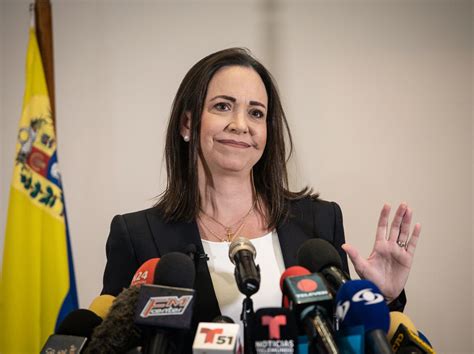
That matters because Nobel prizes do two things at once.
They honor. And they irritate.
They honor the person who has endured pressure, bans, and threats. They also irritate the people who benefit from that pressure, those bans, and those threats. A Nobel is not a shield. It is a spotlight. A spotlight can protect you. It can also make you easier to aim at.
Machado did not even collect the prize in the usual way. Reports say she missed the ceremony and her daughter received it on her behalf. That detail says plenty without raising its voice.
The Travel Ban, the Hiding, and the Exit
For years, Venezuelan authorities restricted Machado’s political path How This “Year in the Veg Garden” Works. She won her opposition primary, but she was barred from running in the presidential election. That pushed the opposition into a workaround and a wider strategy: keep the coalition together, keep the claim of legitimacy alive, and keep pressure on the regime from multiple directions.
Then she disappeared from public view. More than a year in hiding does not sound dramatic on paper. In real life, it is a long time to live with constant risk, limited movement, and a thin circle of trust.
Her arrival in Oslo landed like a dare. Al Jazeera framed it as a “dramatic exit,” and Reuters reported that she defied the travel ban by making the trip.
After more than months of whispers about where she was and how she was living, she reappeared in the open. That alone was the message.
“Maduro Will Leave” and the Hard Math Behind It
When Machado says Maduro will leave, she is not describing a mood. She is describing a plan.
She argues there is no stable future for Venezuela under Maduro, and that the state is running on shrinking Winter Is Still Gardening Season legitimacy. She says the transition is “irreversible.”
That is bold. It is also risky. Words like that can energize supporters, but they can also raise expectations that reality cannot meet on a clean schedule.
Still, Machado paired the bold line with something steadier: she says she wants an orderly and peaceful transition. That phrase is doing heavy lifting.
“Orderly” means no collapse of services, no wild revenge cycle, no vacuum that turns into chaos.
“Peaceful” means no civil conflict, no militia free-for-all, no “liberation” that looks like a new nightmare.
It is the right goal. It is also the hardest goal.
Because in Venezuela, power is not just a seat. It is protection.
Why Oslo, of All Places, Fits This Moment
Oslo is not only where the Nobel Peace Prize is handed out. It is also a place that symbolizes diplomacy that tries to be quieter than the headlines.
Machado’s choice to speak there frames her project as legitimate, international, and civic. It is not a coup story in her telling. It is a democratic correction.
And yet, the timing lands in a world that is not calm.
Her Oslo appearance coincides with rising U.S. pressure and military activity in the region. So even while she sells “peaceful transition,” the background noise sounds like escalation.
That is not her fault. But it is part of the weather she is Planning A Trip To Portugal walking into.
The U.S. Factor: Pressure, Posture, and the Fear of Overreach
Machado’s comments landed as President Donald Trump ramps up his campaign against Maduro, including a reported U.S. military build-up in the southern Caribbean and the seizure of a sanctioned Venezuelan oil tanker.
This is where things get complicated.
Pressure can work. It can also backfire.
Economic and diplomatic pressure can raise the cost of repression and push elites toward negotiation. At the same time, external pressure can feed the regime’s favorite story: that the opposition is a foreign project, and that national sovereignty is under siege.
Machado has aligned herself with U.S. hardliners who see Maduro as a regional security threat. Reuters noted Trump has floated military intervention, while critics raise legal and strategic concerns.
So the opposition is forced to walk a narrow line:
- Welcome help, because Venezuela is exhausted and the regime is entrenched.
- Avoid becoming a prop in someone else’s show.
That line is thin. It is also slippery The Lane Kiffin Heavy Wash Cycle.
The Military Question Nobody Escapes
Machado has said she believes most of Venezuela’s armed forces and police will follow orders from a new government.
That claim is essential, because transitions usually fail when the security apparatus refuses to move.
But “will follow” is not the same as “is following now.” The forces that keep a regime standing also have their own logic. They think about survival, networks, and guarantees. They think about what happens the day after a handover.
A peaceful transition, in practical terms, often depends on offers that feel morally messy:
safe passage, amnesties, exile options, negotiated exits, and legal deals that keep violence down.
It is not satisfying. It is sometimes necessary.
Machado seems to be making room for that reality when she talks about a negotiated changeover, even as she insists Maduro will go Greenland’s Ancient DNA either way.
In other words, she is trying to keep the door open while also telling her supporters the door cannot stay shut.
A Disputed Election and a Country Stuck in Place
Machado’s Oslo message also sits on top of a basic fact: Maduro is still in power more than a year after a disputed 2024 election, and the opposition claims the country should be moving in a different direction.
That is the slow pain of Venezuela’s crisis.
The crisis is not only the price of food or the shortage of medicine. It is also the feeling that time keeps passing, and the political system keeps looping.
People leave. Families split. Communities thin out. Hope becomes seasonal.
So when Machado says “transition,” she is speaking to a country that has learned to distrust big promises, even the hopeful ones.
The Opposition’s Challenge: Stay United, Stay Real
I keep coming back to one basic problem.
Oppositions can lose even when they are “right,” because they fracture. They argue over purity. They fight over credit. They run out of patience. They burn trust.
Machado’s strength has been clarity. Her weakness Walking With A Modern Mummy, at least politically, is that clarity can sound like certainty, and certainty can make compromise feel like betrayal.
But most of all, she is trying to sell a transition that feels safe to ordinary people. A transition is not just a change of faces. It is a change of fear.
And fear is stubborn.
What “Peaceful Transition” Actually Requires
Peaceful transitions do not arrive by magic. They are built, piece by piece.
They usually require:
- A credible claim of legitimacy (the opposition insists it has it).
- A coalition that can govern, not just protest.
- A security plan that prevents internal violence.
- Economic relief fast enough to keep hope alive.
- External support that strengthens institutions, not personalities.
- A path for justice that does not ignite a revenge war.
That list is not inspiring. It is real.
Machado’s job now is to make the world believe she and her allies can pull it off, while making Venezuelans believe it is worth the risk to try.
Maduro’s Incentives, and Why Negotiation Is Still on the Table
Here is the uncomfortable truth: Maduro has incentives to hold on.
Power protects. Power controls money. Power controls courts. Power controls the story told on state media.
And if he leaves, the future is uncertain.
That is why negotiated exits exist in the first place. They are not romantic. They are practical. They offer a ramp instead of a cliff.
The Guardian reported that discussions around asylum and mediation have been part of the wider diplomatic effort to avoid violence. That kind of conversation often looks like weakness to outsiders. It can be the opposite. It can be the only way to avoid bloodshed The Comanche Attack.
So when Machado says “negotiated or not,” she is pressuring Maduro while also signaling she is not allergic to a deal.
She is demanding an ending. She is leaving room for a non-explosive one.
The Risk: Venezuela as a Stage for Bigger Powers
The U.S. pressure campaign is real. The military posturing is real.
That raises a fear across Latin America: that Venezuela becomes a stage for other powers to perform strength.
In that scenario, Venezuelans become extras in their own crisis. The transition becomes less about democracy and more about geopolitics.
Machado seems aware of this risk. She rejects comparisons to Syria or Libya and insists Venezuela is cohesive enough to avoid chaos.
That is the pitch: change, without collapse.
It is the only pitch that fits the word “peace.”
What This Moment Means, Right Now
Machado in Oslo is not the end of the Maduro era. It is not the handover. It is not the sunrise.
It is pressure.
It is a reminder that the opposition is still breathing, still traveling, still holding international space. It is also a reminder that the world is watching, even if it watches in short bursts.
And it is a signal to Venezuelans inside the country Public Health England, and the millions outside it, that the story is not closed.
That signal matters. Morale matters. Momentum matters.
But most of all, delivery matters.
Because Venezuela has had enough speeches for a lifetime.
A Different Kind of Courage
Machado’s political courage is obvious. She defied a travel ban. She came out of hiding. She spoke plainly.
The harder courage, though, is what comes next.
It is the courage to keep a coalition together when victory feels close but is not in hand.
It is the courage to negotiate when negotiation feels dirty.
It is the courage to stop supporters from sliding into rage.
It is the courage to build institutions, not just slogans.
A peaceful transition is not a single act. It is a long discipline.
And discipline, as history keeps showing us, is rarer than bravery.
The Work of Getting to “After”
Venezuela does not just need Maduro to leave. It needs How to Start a Worm Farm an “after” that works.
An “after” where power changes hands and the lights stay on.
An “after” where food is available, hospitals function, and violence does not spike.
An “after” where the state is not a weapon against the public.
That is the real promise hiding inside Machado’s Oslo lines.
Maduro will leave.
The transition will be peaceful.
Both can be true. Neither is guaranteed.
But for the first time in a while, the idea of “after” is being argued in public again, on a global stage, by a Venezuelan who refused to stay hidden.
That is not a conclusion.
Instead of that, it is a start.