Some people get remembered for what they built. Others get remembered for what they refused to give up.
Elizabeth Bowes-Lyon sits in the second group. She did not write laws. She did not run armies. She did not pretend she did. Instead, she learned how to stand still in public, even when life was shaking. Then she made that stillness look warm.
That skill sounds small. It never is.
We often talk about the British monarchy as if it is a set of crowns and old stone. But it is also a set of jobs. Some are loud. Some are quiet. Elizabeth’s job was often the quiet kind. She made continuity feel human, especially when the century tried to make it feel impossible. Albert, Duke of York, and the Quiet Art of Holding Steady.
From Glamis to a Wider World
Elizabeth Angela Marguerite Bowes-Lyon was born on 4 August 1900. She grew up in an aristocratic family tied to Glamis Castle in Scotland, with a childhood shaped by country routines and family expectations.
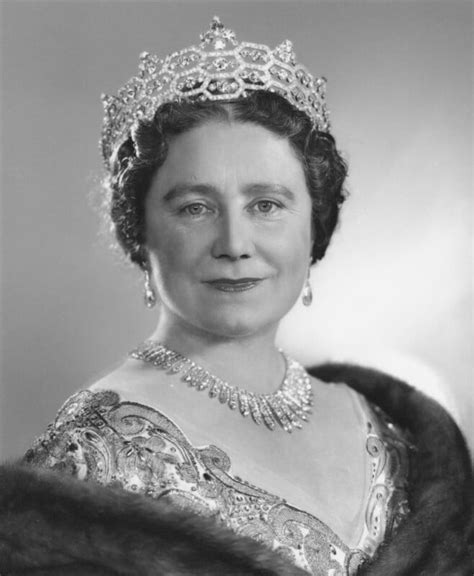
Then the First World War arrived. Glamis Castle became a place for wounded soldiers, and Elizabeth took part in the work of caring for them. It is easy to treat that as a charming detail. It is not. It is the first sign of a pattern.
When history got loud, she moved closer, not farther away.
That habit would later become her public brand. At the time, it was simply what she did.
A Marriage That Changed the Line of Succession
She married Prince Albert, Duke of York, on 26 April 1923 at Westminster Abbey. She became Duchess of York, and the couple built a family that looked, at least on the surface, like a stable branch of a very busy tree.
Their daughters followed. Princess Elizabeth, born in 1926, and Princess Margaret, born in 1930. Those dates matter because they sit right before the storm of 1936, when private choices turned into public crisis.
We like to imagine royal lives as scripted. This one was not. Terminal Velocity, It was revised in real time.
1936: Duty Arrives With No Warning
Edward VIII abdicated in December 1936. Albert became King George VI. Elizabeth became Queen consort. This is the hinge of her life, and it is also the hinge of a modern monarchy that had to survive the century without looking fragile.
The personal side of this moment is often softened in retelling. It should not be. George VI was not raised as the obvious heir, and he faced intense pressure as he stepped into the role. Elizabeth’s part was not ceremonial. She steadied the man, and by extension steadied the institution.
In other words, she did emotional labor on a national stage, and she did it in pearls.
The Blitz and the Value of Being Seen
The Second World War turned symbolism into a form of currency. If leaders looked absent, people felt abandoned. If leaders looked present, people felt less alone.
George VI and Queen Elizabeth chose to remain in London, even as bombing hit key targets, including Buckingham Palace. They visited damaged areas, met civilians, and leaned into visibility when retreat would have been safer.
After Buckingham Palace was bombed in September 1940, Elizabeth was reported to have said she was glad they had been bombed, because it meant they could look the East End in the face. It is one of those lines that survives because it does a lot of work in very few words. It says, we share risk. It says, we are not above this. It also carries a faint sting of irony, as if to admit that solidarity sometimes needs a crater to feel credible.
Of course, a quote is never a bunker. But in wartime, morale is not a luxury item. It is infrastructure.
Style as Strategy, Not Decoration
There is an odd temptation to treat her as the “smiling royal” and stop there. That is tidy, and it sells. It is also incomplete.
Her public presentation in the war years was part of the work. She dressed with intention, she held to routine, and she showed up. Even critics who saw luxury in her clothes still had to admit she did not vanish.
Choose The Right Outdoor Planters For Easy Gardening. We can be honest about the tension. A royal figure can never be fully “ordinary.” The point was not to be ordinary. The point was to be present.
Instead of collapsing the distance between palace and street, she tried to bridge it with repeated contact. After more than a few visits, the act of appearing became its own message.
A Queen, Then a Widow, Then Something New
George VI died in 1952. Elizabeth’s role changed overnight. Her daughter became Queen Elizabeth II, and the older Elizabeth became “Queen Elizabeth the Queen Mother,” a title designed to avoid confusion and to mark a new phase of service.
This is where her longevity becomes more than trivia. She did not simply “live a long time.” She remained visible across decades of upheaval, from post-war austerity to late-century scandal cycles. In each era, she played a steady note.
That note was not always fashionable. That was the point.
If modern monarchy is partly about reassurance, she became a reassurance engine.
The Art of Popularity Without Confession
Modern public life rewards confession. Tell us what hurts. Tell us what you fear. Tell us your private truth.
Elizabeth Bowes-Lyon came from a different school. She offered warmth without spilling her inner life into the street. She did not confuse intimacy with disclosure. She smiled, she spoke politely, and she kept moving.
That restraint can look cold in a confessional age. It can also look like discipline.
We tend to underestimate the work it takes to hold a boundary for decades, especially when the world keeps asking for more access.
Her popularity did not come from telling us everything. It came from making us feel that something stable still existed, even if we never got to touch it.
Wartime Courage, Told in Small Scenes
When we talk about courage, we often picture big gestures. Her courage showed up in smaller scenes. 7 Practical Tips to Make Gardening Easier.
A visit to a bombed street.
A conversation with families who had lost homes.
A refusal to hide.
A steady face that did not turn away.
Museums and historians often highlight this choice to stay visible during the Blitz, because it mattered to the public story of endurance.
We should not romanticize it. War did not become kinder because a queen walked through rubble. But morale is a real thing, and morale spreads. It spreads the way fear spreads, only in the other direction.
The Queen Mother as an Institution
By the late twentieth century, “the Queen Mother” was less a person and more a familiar presence. She attended events, supported charities, and served as a living link to George VI, to wartime London, and to a style of public duty that did not try to reinvent itself every year.
That constancy had value. It also had limits. It could not solve political problems. It could not fix economic pain. It could not stop the monarchy from facing criticism.
But it could offer continuity, and continuity is not nothing.
When we look back, we can see that her long life also allowed the monarchy to tell a story of endurance through a single figure. She became a bridge from one century to the next.
Longevity, Aging, and a Very Public Ending
Elizabeth died on 30 March 2002 at Royal Lodge, Windsor, aged 101. She was then buried at St George’s Chapel, Windsor, alongside King George VI.
Her funeral drew huge public attention. Garden PH – Acid And Alkaline Soil Explained. That response was not only about her. It was also about what she represented.
In the end, she offered the monarchy something it rarely gets in modern life. A moment of broadly shared affection.
That is not an everyday asset. It is the kind leaders notice when it appears, the kind they quietly wish they could manufacture, and the kind that never comes from manufacturing.
What We Can Take From Her Life Now
It is tempting to frame her story as a fairy tale. It is not. It is a story about a person who adapted to a role she did not expect, then kept adapting for almost a century.
When we look at Elizabeth Bowes-Lyon with modern eyes, we can take a few plain lessons.
Presence matters.
Not as theater. As reassurance.
Restraint is a skill.
It is not the same as silence. It is choosing what to carry in public.
Symbols still work.
We live in a world that claims it has outgrown them. Then crisis hits, and we reach for them again.
Endurance is a kind of leadership.
Not flashy leadership. Not the kind that trends. The kind that holds the line.
She did not do everything right. No public figure does. But she understood something basic about how people survive hard times.
They survive better when they feel seen.
The Smile That Stayed
Elizabeth Bowes-Lyon is often reduced to a nickname, “the Queen Mum,” as if history decided she belonged in a family photo, not in a political storm.
But she spent much of her life inside storms. She simply learned not to let them blow her off her feet.
We can read that as charm. We can also read it as work.
It was work.
And it left a mark that still holds.