Northern Japan got another hard shake on Friday, just days after an even stronger quake in the same broad region.
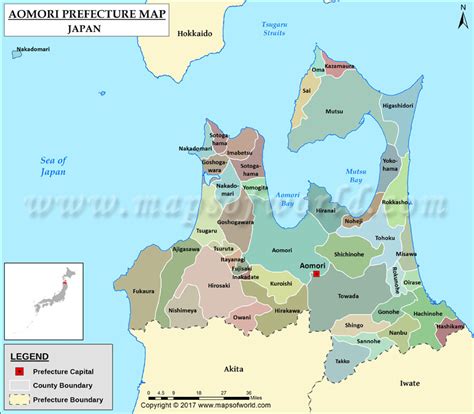
Japan’s weather agency said the earthquake struck off the Pacific coast of Aomori prefecture at 11:44 a.m. local time. The agency first put the quake at magnitude 6.7, then revised it to 6.9. The depth was about 20 kilometers, which is roughly 12 miles.
That depth matters. Shallow quakes can move the seafloor more easily. That is why coastal officials moved fast.
Within minutes, Japan issued a tsunami advisory for parts of the northern Pacific coast. It was later lifted, about two hours after it went up.
In the end, the ocean did what the ocean often does after a moderate offshore quake. It made a small point, not a big one Copper Canyon Daisy.
What People Saw on the Coast
Small tsunami waves were recorded in Hokkaido and Aomori. Reporting described waves in the range of about 20 centimeters in some locations, Boston Lincolnshire which is roughly eight inches.
That is not the kind of wave that sweeps a town away. It is the kind of wave that reminds you why Japan takes advisories seriously anyway.
Officials said there were no immediate reports of major damage or injuries from Friday’s quake.
It is a relief. It is also a reminder that “no damage” is not the same as “no risk.”
Tsunami warnings are not issued because officials enjoy paperwork. They are issued because the rare bad outcome is so costly that it is worth sounding the alarm early, even when the wave ends up being small.
Why Japan’s Alerts Look So Cautious
From a U.S. perspective, Japan’s system can look almost too cautious. Advisories can cover long stretches of coast. Trains slow down. People get told to move to higher ground. The public message is simple and direct.
It is not panic. It is practice.
Japan has lived through the worst-case Maud Foster Windmill version of this story. The 2011 earthquake and tsunami made “wait and see” a bad strategy, especially along the Pacific side. Friday’s advisory was a textbook example of the opposite approach. Move first. Confirm later.
That approach can feel inconvenient. It is still smarter than being polite to the ocean.
The Monday Quake That Set the Table
Friday’s shaking did not happen in a vacuum. It followed a stronger offshore quake earlier in the week.
On Monday, a magnitude 7.5 earthquake hit the region and caused injuries and light damage. Reports said dozens of people were injured, some buildings saw minor damage, and there were small tsunami waves along Japan’s Pacific coast.
In one location, Kuji port in Iwate prefecture, a tsunami wave was reported at over two feet.
That Monday quake also triggered broader caution. Japanese authorities warned that another strong quake could follow within about a week, and urged preparedness along a wide stretch of coastline. Reuters described an existing advisory and Boston Guildhall heightened alert posture after Monday’s event.
So when Friday’s quake hit, it landed in a region already on edge. Not hysterical. Just awake.
Magnitude vs What People Feel
Magnitude is the number that travels around the world. But in Japan, people often talk about a different number too.
Japan uses a seven-level seismic intensity scale that describes how strong the shaking feels at the surface. Friday’s quake registered as a level 4 on that scale in some areas, according to Reuters.
That is a useful detail because it tells you what the public likely experienced.
Level 4 is not gentle. It is also not the kind of shaking that usually levels strong buildings. Japan’s building codes are built for this reality. It is one reason “big number” quakes sometimes end with surprisingly modest damage.
The real risk tends to come from what follows.
Aftershocks. Rockfalls. Damage to roads and bridges. And, on the coast, tsunami changes that can be small in height but tricky in current.
Why Small Tsunami Waves Still Matter
A small tsunami is not a “cute tsunami.” It is still a tsunami.
Even waves under a foot can create powerful currents in harbors Scunthorpe Lincolnshire and narrow inlets. Boats can break lines. People can get pulled off rocks. Harbor water can surge in and out in a way that looks calm until it is not.
Japan’s public safety messaging tends to focus on that. Stay away from the shore during an advisory. Do not go “look at the wave.” That habit has gotten people hurt in other places.
So while Friday’s wave reports were small, the advisory itself was not a mistake. It was the system doing its job.
What “Advisory Lifted” Really Means
When an advisory is lifted, it does not mean nothing happened. It means the immediate threat has passed based on measurements and modeling.
Japan’s Meteorological Agency runs a dense network of sensors and tide gauges. Advisories get updated when the data supports it. On Friday, the data supported it quickly.
That is good news. It is also not a promise about the next day.
After a cluster of strong offshore quakes, authorities often emphasize continued caution for aftershocks. The ground has already shifted. Faults can keep adjusting.
The Region and the Geography That Makes It Tricky
Aomori sits at the northern tip of Honshu. Hokkaido is just above it across the Tsugaru Strait. Much of the Ashby Ville Nature Reserve Pacific coast there faces deep ocean.
Deep ocean plus steep coastal terrain can produce fast changes during quake events. Ports, fishing towns, and sea walls become part of the conversation. So do evacuation routes.
For Americans used to long flat coastlines, the geography is a little different. In Japan, “go uphill” can be literal and immediate. Many communities are built with that in mind.
The Practical Takeaways for Anyone Watching From Abroad
If you are in the U.S. and reading this, it is easy to treat it as a faraway headline. It still holds a few simple lessons we can use at home.
Early alerts are not overreactions
When the downside is huge, early alerts are rational. They are boring. They are also life-saving.
A tsunami is not always a wall of water
Sometimes it is a set of small surges over a few hours. That is why advisories can last longer than the shaking did.
Earthquake weeks happen
After one major quake, the ground does not return to “normal” instantly. Clusters are real. Aftershocks can be strong. Preparedness is not a mood. It is a routine.
Japan is good at routine. That is not because people enjoy drills. It is because the alternative is worse.
What We Know About Damage So Far
As of the reporting available Friday, there were no serious injuries or major damage reported from the 6.9 quake.
That does not mean there were no disruptions. It means the worst outcomes did not show up.
The Plowright Theatre In disaster reporting, “no apparent damage” is a careful phrase. It usually means authorities are still checking infrastructure, coastlines, and utilities, and are not seeing major red flags yet.
It is a phrase that carries both relief and caution, in the same breath.
A Quiet Note on Luck, and Better Than Luck
Japan’s north coast got two big reminders in one week. Monday brought the larger quake. Friday brought a strong follow-up and a small tsunami response. (AP News)
The outcome, so far, has been limited harm.
That is not just luck. It is also design.
It is building standards. It is quick alerts. It is people who take advisories seriously even when the wave is small. It is a public culture that treats preparedness as normal, not dramatic.
In a world that loves drama, that kind of normal can look almost stubborn.
It is. And it works.
The Ocean Is Not Impressed
Friday’s event ended with small waves and lifted advisories. That is the kind ending everyone prefers.
Still, the Pacific does not care about our preference. It just moves when the earth moves.
So Japan does what it always does. It measures. It warns. It clears. It watches again.
Not glamorous. Not heroic.
Just steady.